
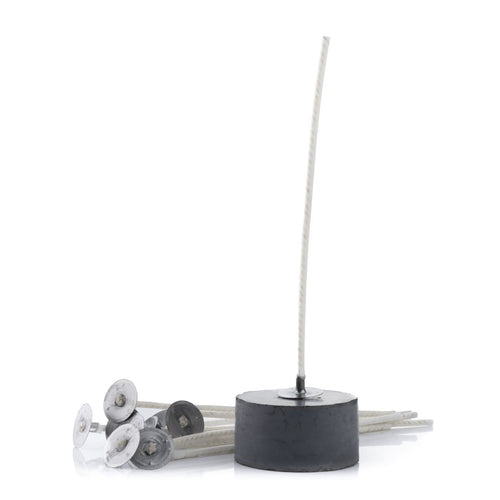
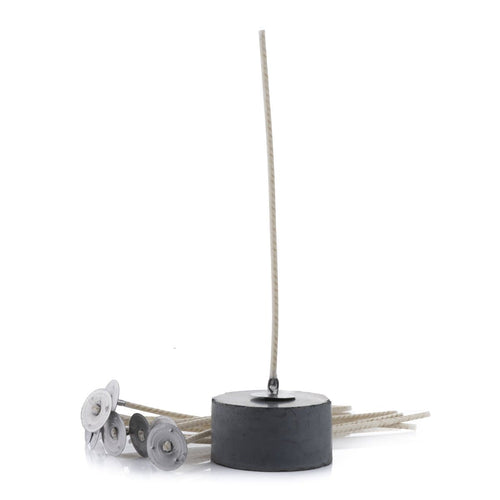
No. Each wick series is optimised for specific wax types. Using a wick designed for paraffin in a soy candle, or vice versa, is a common cause of poor performance. Match the wick series to your wax type first.
The Complete Guide Choosing the Right Candle Wick
Choosing the right wick is one of the most important, and most overlooked, steps in candle making. Get it wrong and you’ll see tunnelling, sooting, weak scent throw, or an unsafe flame. Get it right and every candle you make burns cleanly, smells great, and lasts as long as it should.
This guide covers everything you need to know: how to match a wick to your wax, vessel size, and fragrance content; which wick series to choose; and how to tell when a wick is performing correctly.
Four Ways to Find the Right Wick
Use a Candle Recipe (Fastest)
Our lab team has tested hundreds of fragrance, wax, and vessel combinations. Each recipe specifies the exact wick to use, no guesswork required. This is the fastest, most reliable starting point.
Available for our three best-selling waxes: RCX Rapeseed & Coconut, EU464 Soy, and US464 Soy. To find a recipe, open the fragrance you want to use and look for the ‘Tried & Tested Recipes’ section.
Recipes meet EN fire safety and sooting standards. They are updated continuously as new fragrances and jars are tested.
Wick Sample Packs
If there’s no recipe for your fragrance and you’re using RCX Rapeseed & Coconut wax or Golden Wax 464 Soy, our Wick Sample Packs give you a curated selection of wicks that typically perform well in those waxes, ideal for starting a systematic test.
Choose by Wick Series
If you want full control, or are working with a wax or vessel combination we haven’t tested, you can choose wicks by series. The sections below explain which series suit which waxes and why.
-
CL14 Wick
From £2.44 exc. VAT -
CL12 Wick
From £2.44 exc. VAT -
Stabilo 14 Wick
From £2.44 exc. VAT -
Stabilo 16 Wick
From £2.44 exc. VAT -
CL10 Wick
From £2.44 exc. VAT -
CL16 Wick
From £2.44 exc. VAT

Choose a Wick Series for Your Wax
Each wick series is engineered for specific wax types. The manufacturer optimises braid patterns, thread composition, and chemical treatment to suit the burn characteristics of each wax. Using a wick from the wrong family for your wax is one of the most common causes of poor candle performance.
Plant Wax Candles (Soy, RCX, Other Vegetable Waxes)
Plant waxes require larger, more robust wicks than paraffin. The best wicks for plant wax candles are typically slightly beige in colour, not bleached white.
Plant wax:
Stabilo Series Wicks (Cotton & Paper)
CL Series Wicks (Cotton & Linen)
TCR Series Wicks (Cotton & Paper)
V Series Wicks (for difficult fragrances)
VRL Series Wicks
Paraffin & Mineral Blend Candles
Paraffin and hybrid wax candles typically require smaller wicks than pure plant waxes. Most wicks designed for paraffin are very white in appearance.
LX Series Wicks
TG Series Wicks
VRL Series Wicks
For difficult fragrances
V Series Wicks
How Vessel Size Affects Wick Selection
The diameter of your vessel is the single biggest factor in wick sizing. As a general guide:
Suggested starting wick size
| Vessel / Diameter | Suggested starting wick size |
|---|---|
| Small (e.g. 9cl) | Lower end of the series — e.g. CL4–6, Stabilo 4–6, LX6 |
| Medium (e.g. 20cl) | Mid-range — e.g. CL8–10 |
| Large single wick (e.g. 30cl) | Larger wick still — confirm with the wick finder tool |
| Very large (e.g. 50cl) | Two or three smaller wicks (see below) |
When to Use Multiple Wicks
As a general rule, the maximum melt pool from a single wick is around 76mm in diameter. If your vessel is wider than this, two or three smaller wicks will produce a better, more even melt pool than one oversized wick.
Through our testing, the three wicks required for a 50cl vessel are similar in size to the wicks needed for a 9cl of the same wax and fragrance.
Download: 50cl vessel wicking template
How Fragrance Oil Affects Wick Selection
Fragrance content and composition both influence how your candle burns and therefore which wick you need.
- A higher fragrance concentration does not always mean a better hot throw. Too much oil can actually weaken the flame.
- Some fragrance oils are harder to burn and need a larger wick, it is not uncommon to need the largest wick in a series to get a 30cl single-wick candle to perform correctly.
- Some fragrances are not compatible with mineral wax blends. Always check the fragrance data sheet.
- Always use candle-specific fragrance oils from a reputable supplier.
Tip: If you change your fragrance load by more than 1–2%, re-test your wick. Fragrance load and wick size interact directly. Adjust fragrance load and wick size together.

Signs You’ve Chosen the Right Wick
When testing, look for all four of the following:
- Stable flame: Little to no flickering.
- Full melt pool: A complete (or near-complete) melt pool no deeper than 1cm after a 4-hour burn.
- Clean wick: Minimal mushrooming, no soot on the jar or the wick.
- Clean scent: A pleasant aroma that fills the room with no chemical or ‘hot burning’ smell.
Signs Your Wick Needs Adjusting
Wick too large: Large flame, heavy mushrooming, soot on glass, melt pool deeper than 5mm, or fragrance smells ‘cooked’.
Wick too small: Tunnelling (melt pool doesn’t reach the edge), flame drowning in the melt pool, weak scent throw.
Wood Wicks Guide
Wooden wicks offer a distinctive aesthetic and a subtle crackling sound with certain fragrances. They can be used with both plant-based and mineral wax systems, but the ply type matters.
| Wax type | Which wood wick to use |
|---|---|
| Paraffin / mineral wax | Single Ply (S Series). Laminated wicks will produce a flame that is far too large with paraffin. |
| Plant wax (soy, RCX, etc.) | Laminated / Double Ply (L Series). Two strips of wood engineered together for a stronger, more consistent burn. |
| Plant wax (advanced) | Single Ply wicks can be used with plant wax, but you will usually need to pair two pieces together to create your own laminated wick. This is an advanced technique that allows fine-tuning per formulation. |
Burn Testing and Compliance
Development testing is not optional, it is the only way to confirm your candle is safe and performs as intended. For every candle variant you plan to sell, you should:
- Conduct your own burn tests. Record flame height, melt pool depth, soot, and fragrance throw across multiple burns.
- Test against EN standards. Once you’re happy with performance, formal testing to EN standards confirms the candle is safe for sale. We offer this service in our lab.
- Test every variant. A change of wax, fragrance, vessel, or fragrance load is a new formulation. It needs its own test.
FAQ Frequently Asked Questions
Can I use any wick with any wax?
What causes mushrooming on the wick?
Mushrooming (carbon build-up on the tip) usually means the wick is too large for the formulation. Try the next size down within the same series. Some mushrooming in plant wax candles is normal; heavy mushrooming is not.
How do I know which wick size to start with?
Start with the vessel diameter. Use the Wick Finder Tool to get a recommendation, or check our candle recipes for your fragrance. Then a single 4-hour burn test will tell you whether to go up or down a size.
My candle is tunnelling - what should I do?
Tunnelling means the melt pool is not reaching the edge of the vessel. The wick is likely too small. Try the next size up. Also check your fragrance content, too much oil can suppress the flame.
How many wicks do I need for a large vessel?
The maximum melt pool from one wick is around 76mm diameter. For vessels wider than this, such as a 50cl jar, use two or three smaller wicks. Download our 50cl wicking template as a starting point.
Do I need to test my candles even if I use a Candle Shack recipe?
Yes. Recipes are tested starting points, not a substitute for your own development testing. Your fragrance concentration, dye, ambient conditions, and equipment all affect performance. Formal EN-standard testing is required before selling.