Reed Diffuser Supplies

Reed Diffuser Supplies

Our reed diffuser supplies give you everything you need to create professional-quality diffusers. From bottles and caps to reeds, bases, labels and packaging, each product has been tested in our in-house lab for performance and safety.

Whether you’re starting your first range or expanding an existing collection, our diffuser supplies make it simple to produce reliable, great-looking products that your customers will enjoy.
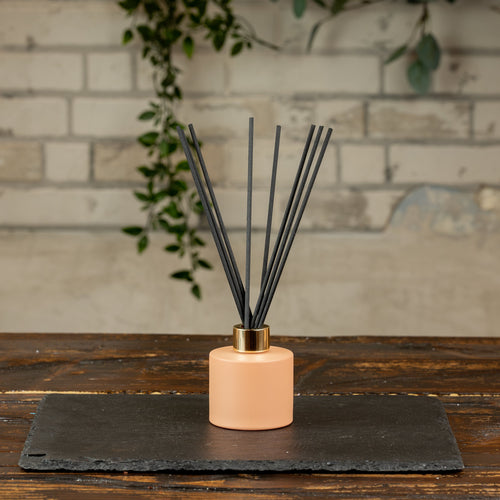
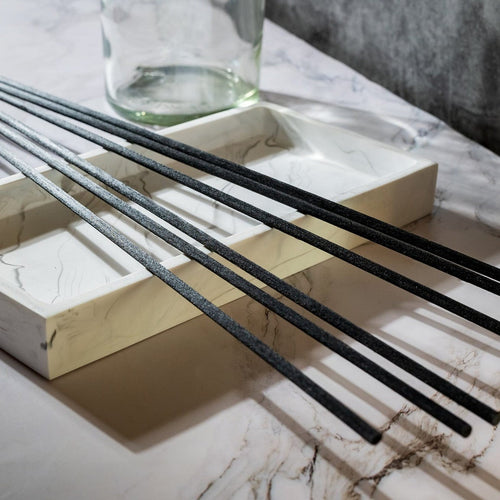
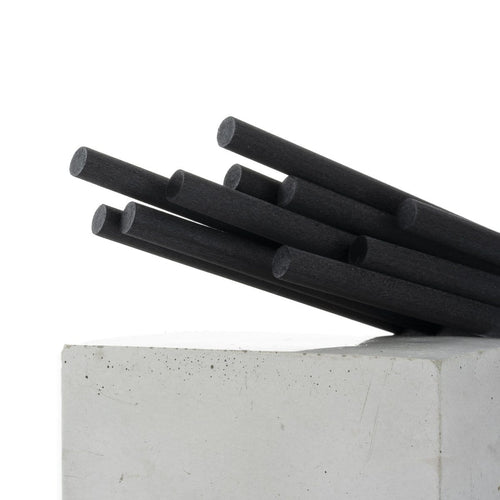
Black Fibre Reeds - 4mm x 400mm

£2.17 exc. VAT

Black Rattan Reed (4mm thick)

From £8.96 exc. VAT

Clear Tactile Warning Labels 25mm

From £0.60 exc. VAT

50mm Black Diffuser Safety Label

From £0.60 exc. VAT

50mm Clear Diffuser Safety Label

From £0.60 exc. VAT

50mm White Diffuser Safety Label

From £0.60 exc. VAT

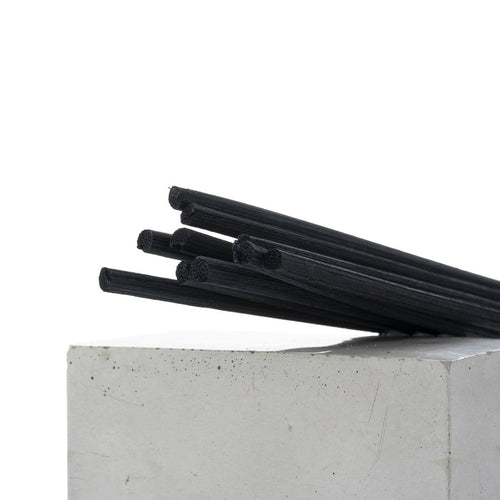
Black Fibre Reeds 3.5mm x 250mm

From £10.76 exc. VAT

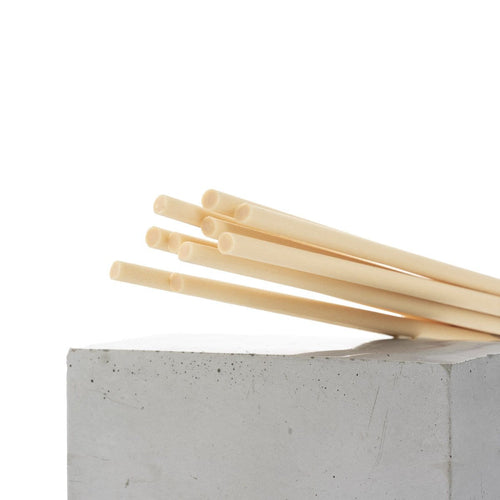
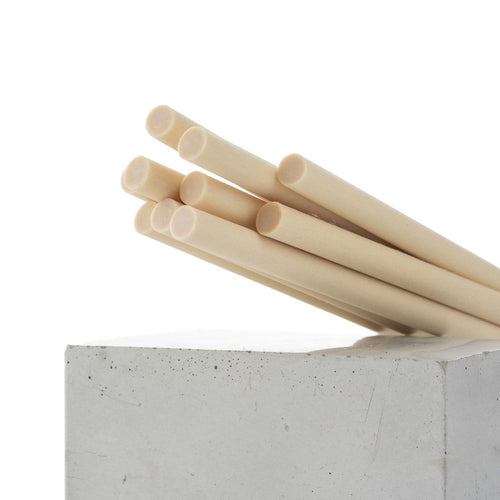
Natural Colour Fibre Reeds 3.5mm x 250mm

From £10.76 exc. VAT

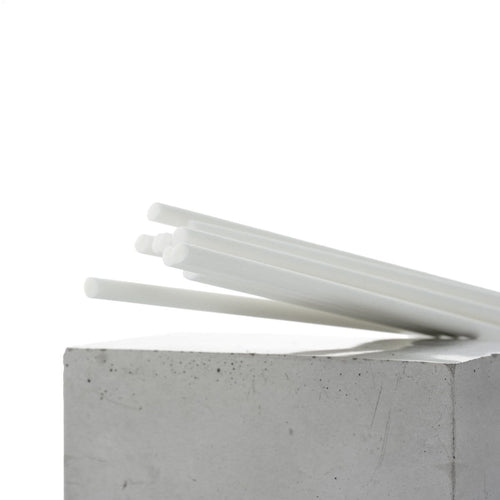
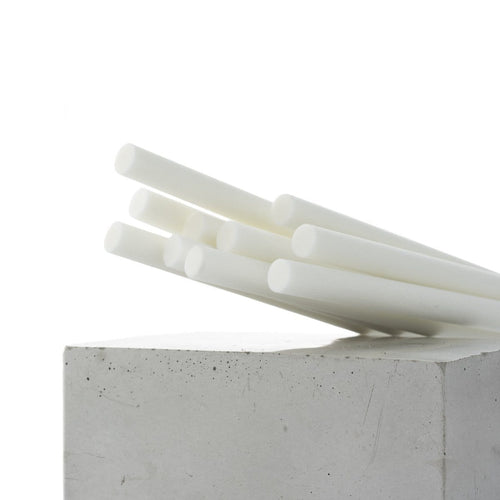
White Fibre Reeds 3.5mm x 250mm

From £10.76 exc. VAT

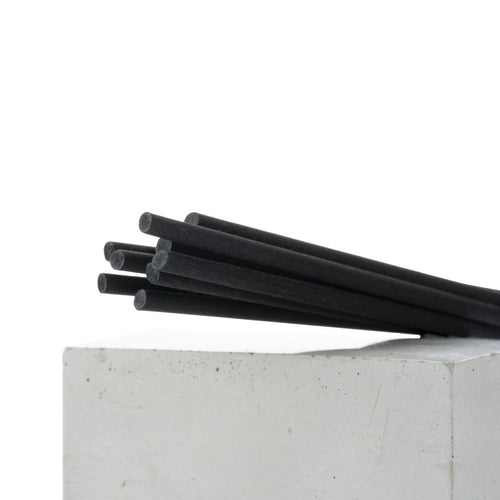
Black Fibre Reeds 6mm x 175mm

From £10.76 exc. VAT

Natural Colour Fibre Reeds 6mm x 175mm

From £10.76 exc. VAT

White Fibre Reeds 6mm x 175mm

From £10.76 exc. VAT

Frequently asked questions

What size bottle should I use for a reed diffuser?
A 100ml bottle is the most common size for a standard room diffuser, typically lasting four to eight weeks at moderate intensity depending on fragrance concentration, number of reeds and room temperature. Larger bottles of 150-200ml suit bigger spaces or premium products designed to last longer. For commercial environments such as retail outlets, hotel lobbies or spa spaces, a 1 litre centrepiece diffuser is also an option.
Can I use any glass bottle as a reed diffuser bottle?
Most glass bottles are suitable for reed diffusers - glass is chemically compatible with augeo-based diffuser formulations without issue. The practical considerations are stability and neck size. A bottle that is very tall and narrow creates a tip-over risk, as the reeds extend well above the bottle and can be caught accidentally. A narrow neck also forces the reeds to point straight up, which raises the centre of gravity further and increases spill risk. A wider neck allows the reeds to fan out at an angle, which improves stability and diffusion. Be more cautious with ceramics and other porous materials, which may not be compatible with solvent-based diffuser bases.
What neck size do I need for diffuser reeds?
It depends on the thickness of the reeds you are using. Standard 3.5mm fibre reeds work in most diffuser bottle necks. The 6mm ultra-thick reeds require a significantly wider neck - they are not suitable for a standard 100ml bottle, and only around three will fit in a wider-necked vessel such as the 165ml bottle. If you are planning to use five or six reeds in a bottle, add up the total diameter of the reeds you intend to use and make sure the neck opening accommodates them with a little room to spare. A neck that is too tight forces all the reeds to point straight up, which reduces stability and limits diffusion.
How many reeds should I put in a diffuser bottle?
Five to eight reeds in a 100ml bottle is a reasonable starting point for a standard-sized room. More reeds give stronger scent but faster depletion; fewer reeds give a subtler result and longer life. It is useful to instruct customers to adjust the number of reeds to control intensity - this also reduces the chance of a negative review based on the diffuser running out faster than expected.
What is the difference between a cap and a collar-and-bung closure on a diffuser bottle?
Both serve the same purpose - sealing the bottle for retail display and transit to prevent spills and fragrance loss before first use. A cap provides a single screw or press-fit seal; a collar and bung is a two-part closure where the collar ring stays on the bottle neck and the bung is removed to insert reeds. The choice is primarily aesthetic. Verify that your chosen closure is compatible with the specific neck finish of the bottle you are using.
Does the shape of a diffuser bottle affect how well it works?
Not significantly. The rate of diffusion is driven primarily by the volatility of the fragrance mixture, the number of reeds and the ambient environment - temperature, airflow and room size. Bottle shape has very little effect on this. The main practical consideration is stability: a bottle that is too narrow causes the reeds to bunch together pointing straight upward, which increases tip-over risk and reduces the fan of the reeds. Beyond that, shape is largely a branding and aesthetic decision.
What base should I use for a reed diffuser and how much fragrance do I add?
The two most common bases are solvent-based carriers, which work well with fibre reeds and give a clean, low-odour result, and perfumer's alcohol, which is popular for a lighter, more volatile diffusion and pairs well with rattan reeds. A typical starting formulation is 15-20% fragrance oil in base, though the correct proportion depends on the IFRA maximum for the specific fragrance in the reed diffuser category and the intensity you want. Always check the IFRA certificate for each fragrance - the permitted level for diffusers can differ substantially from the candle category.
Can I use candle fragrance oil directly in a reed diffuser?
In most cases yes, provided you dilute it in an appropriate diffuser base rather than using it neat. Common bases include solvent-based carriers and perfumer's alcohol, each giving slightly different diffusion and aesthetic characteristics. The main exceptions are fragrances where the IFRA limits for the reed diffuser category are lower than for candles - in those cases the candle-grade oil may not be safe at diffuser concentrations and a reformulated version is needed. Viscosity and surface tension can also affect how well a fragrance wicks through reeds, which is why some fragrances are available in two versions - one optimised for candle use and one for diffusers. Always check the IFRA certificate for the diffuser category before finalising your formula.
Which IFRA category applies to reed diffusers?
Reed diffusers currently fall under IFRA Category 10A. Note that this categorisation has been debated within the industry and is subject to review in a future amendment, so it is worth checking the current IFRA guidance when formulating. The important practical point is that Category 10A limits can differ significantly from Category 12 - which covers candles and wax melts - so the percentage you use in a candle cannot simply be carried across to a diffuser formula. Always check the specific IFRA certificate for each fragrance you use in a diffuser product.
Do finished reed diffusers need CLP labels?
Yes, in almost all cases. Finished reed diffuser products are classified as mixtures under UK and EU CLP regulations. Augeo-based formulations frequently contain components classified as hazardous at typical usage concentrations, so most finished diffusers require hazard pictograms, signal words and responsible party contact details on the label. You need the Safety Data Sheet for both the fragrance and the base to calculate your classification at your actual formula concentrations.
Why is my reed diffuser not throwing any scent?
The most common cause is incompatibility between the fragrance oil and the base. Many fragrance oils formulated for candles do not diffuse effectively in solvent-based carriers - they may wick and evaporate but produce little perceptible scent. Most candle fragrance oils will perform better in perfumer's alcohol, but even then thorough testing is essential before committing to a product. This is why some fragrances are available in two versions - a candle formulation and a dedicated reed diffuser formulation - and why tested diffuser recipes are worth using as a starting point. If the oil is visibly evaporating but you cannot smell it, the issue is likely the fragrance itself rather than the base or the reeds. Other causes worth checking are reeds that have become fully saturated and stopped wicking, and fragrance concentration below an effective threshold.
How long should a 100ml reed diffuser last?
A well-formulated 100ml diffuser typically lasts four to eight weeks at moderate intensity. Longevity depends on room temperature, number of reeds, and fragrance concentration. Diffusers in warm rooms or near heat sources deplete faster. This variability is worth explaining in your product instructions so customers understand how to extend the product's life by adjusting reed count.